MACHINE VICES.
The machine clamping vices for workpiece automation are used to hold the workpiece securely and stably in place during the milling process. This enables precise machining and ensures the accuracy of the milled parts. The workpiece is clamped in the vice between two embossing jaws. We offer vices and embossing jaws in various designs.
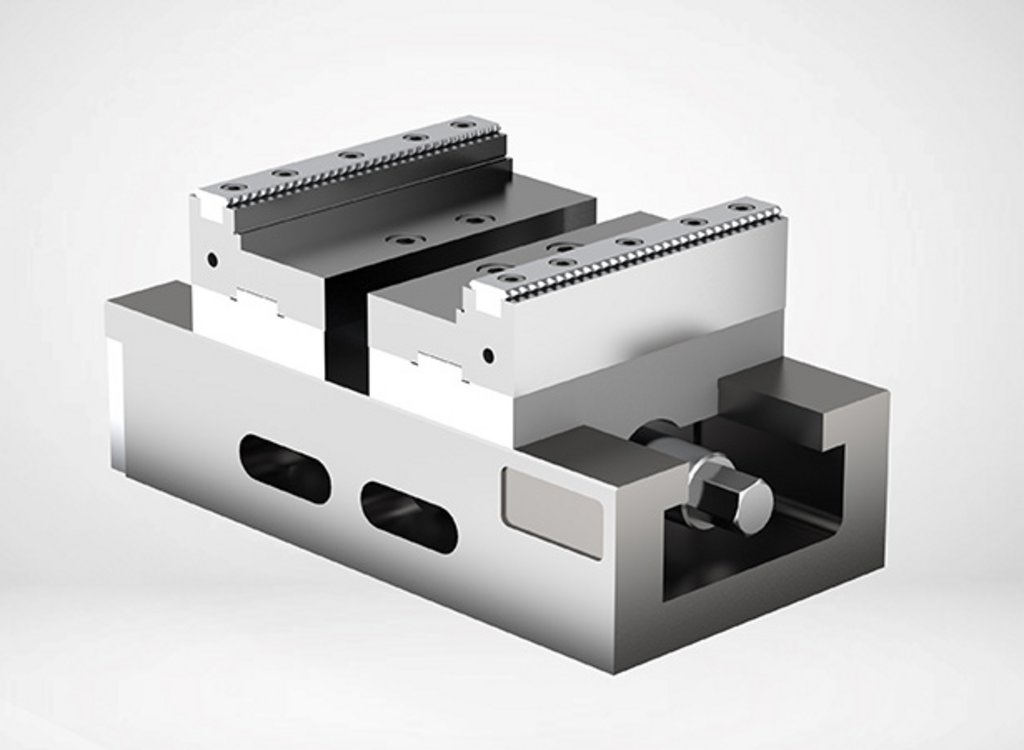
Fast set-up
VICE WITH INTEGRATED PALLET.
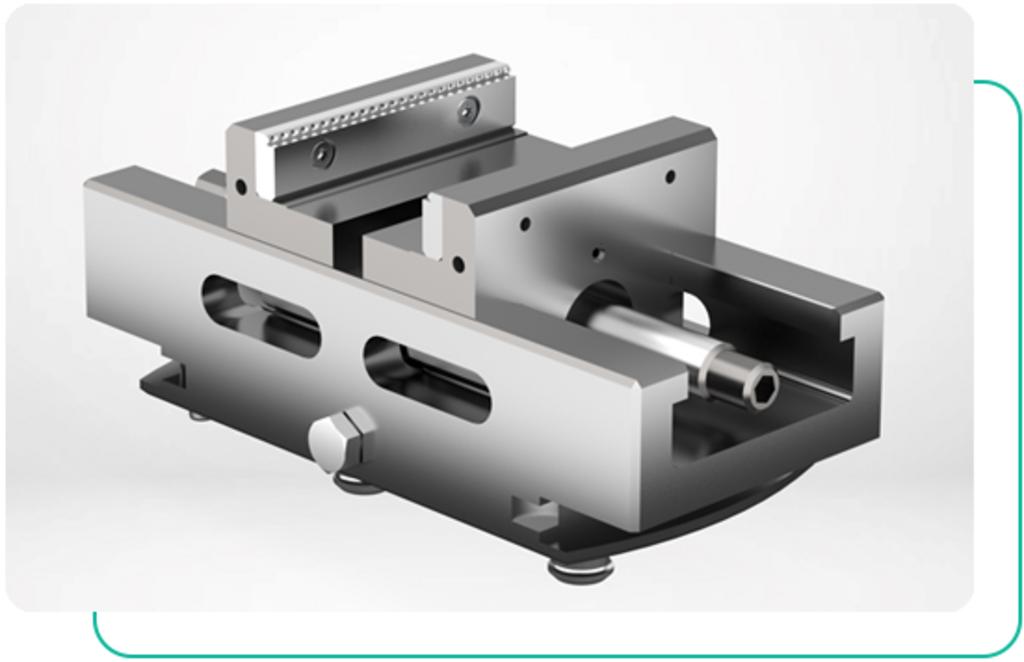
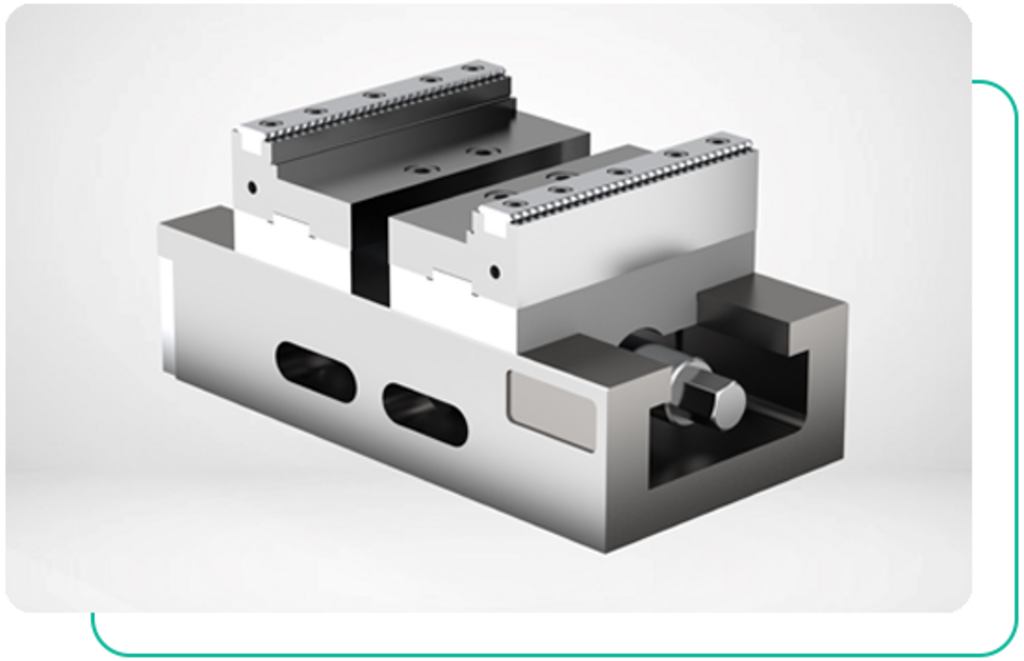
Machine vices from Indunorm have an integrated gripper interface and, depending on the version, are also supplied with an integrated pallet. The advantage of the integrated pallet is that there are no additional costs for carrier pallets. It also makes set-up quicker and easier. The compact design also ensures good accessibility to the workpiece, even when using short tools.
Positive clamping
TOP JAWS WITH EMBOSSING STRIPS.
The machine clamping vices are designed in such a way that they clamp positively for high holding forces with low clamping forces. We offer various top jaws with embossing ledges for optimum holding of the workpiece. The workpieces are embossed using an embossing station to apply a defined embossing for positive clamping.
Precise clamping
CLAMPING VICES FOR CARRIER PALLETS.
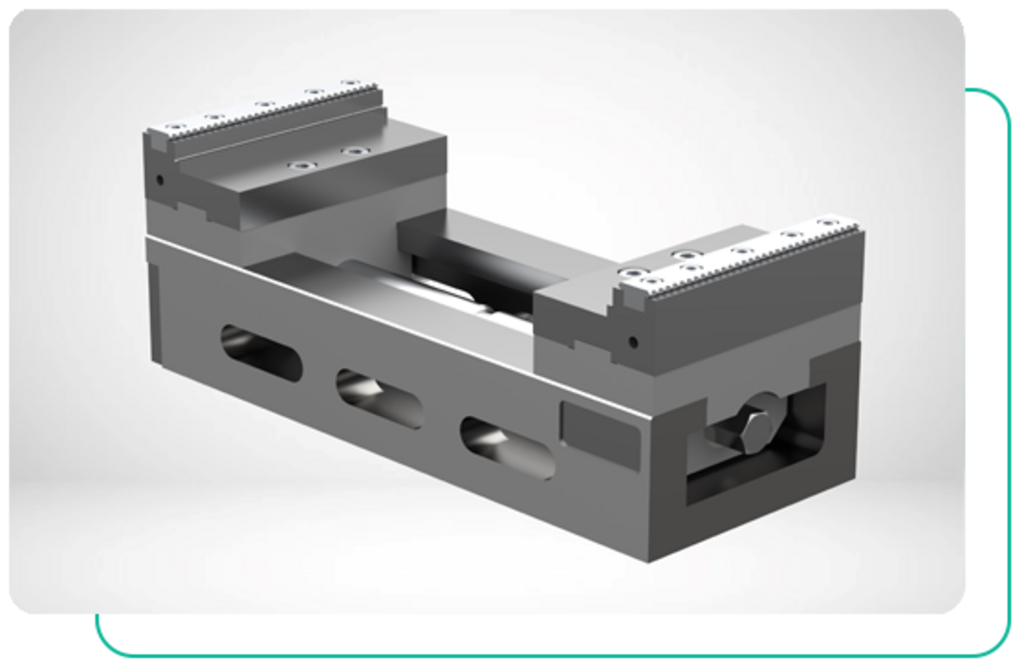
The classic machine vice from Indunorm is the IZS (Indunorm centering vice). The IZS was developed for use on carrier pallets and is available for jaw widths from 50 to 125 mm and a bed length of 315 mm. The centering accuracy of all Indunorm clamping vices is +/- 0.02 mm.
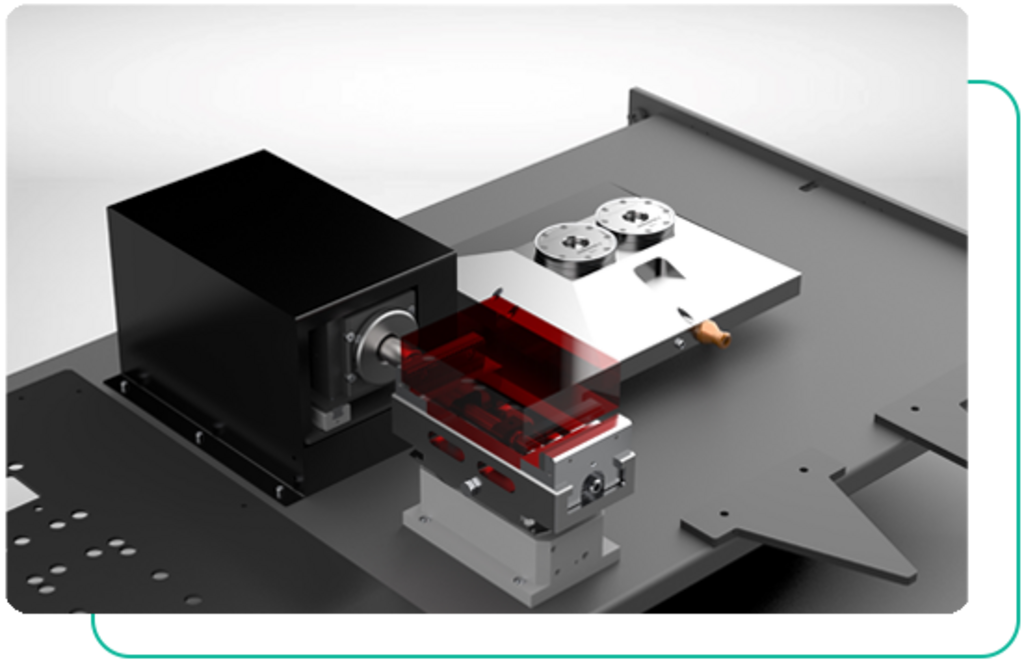
Automated clamping
THE ROBOT DOES THE SET-UP.
An Indumatik equipped with a screwdriving station can automatically process a wide range of workpieces using a mechanical vice. During the machining process, the workpiece is automatically inserted into the vice and clamped. To minimize changeover times, we recommend the use of at least two vices. This means that the workpieces and finished parts can be clamped and unclamped during machining time while the milling machine continues to work.

FAQ - Your questions, our answers
What is the main function of machine vices?
Machine vices are used to securely and stably fix workpieces during the milling process. This ensures precise machining and guarantees the accuracy of the manufactured parts.
What are the advantages of a clamping block with an integrated pallet?
A clamping block with integrated pallet enables faster and easier setup. Since there are no additional costs for carrier pallets and the design is very compact, good accessibility to the workpiece is also ensured, even when using short tools.
How do the clamping bars achieve optimum grip on the workpiece?
The clamping devices are designed for form-fitting clamping, which enables high holding forces with low clamping forces. Special attachment jaws with embossing strips are used to guarantee optimum hold. The workpieces are first embossed with a defined pattern at an embossing station.
What level of precision do Indunorm vices offer?
All Indunorm clamps offer high centering accuracy of +/- 0.02 mm. This also applies to the classic IZS (Indunorm centering clamp), which was developed for use on carrier pallets.
Can the clamping process be automated?
Yes, if an Indumatik system is equipped with a screwdriving station, the robot can take over the setup and clamping of the workpieces in a mechanical vise fully automatically. The workpiece is automatically inserted into the clamping block and clamped.
How can changeover times be minimized in automated processing?
To minimize changeover times, the use of at least two clamping devices is recommended. While the milling machine is machining one workpiece, raw and finished parts can be clamped and unclamped in the second clamping device during the main processing time.