GRIPPER SOLUTIONS.
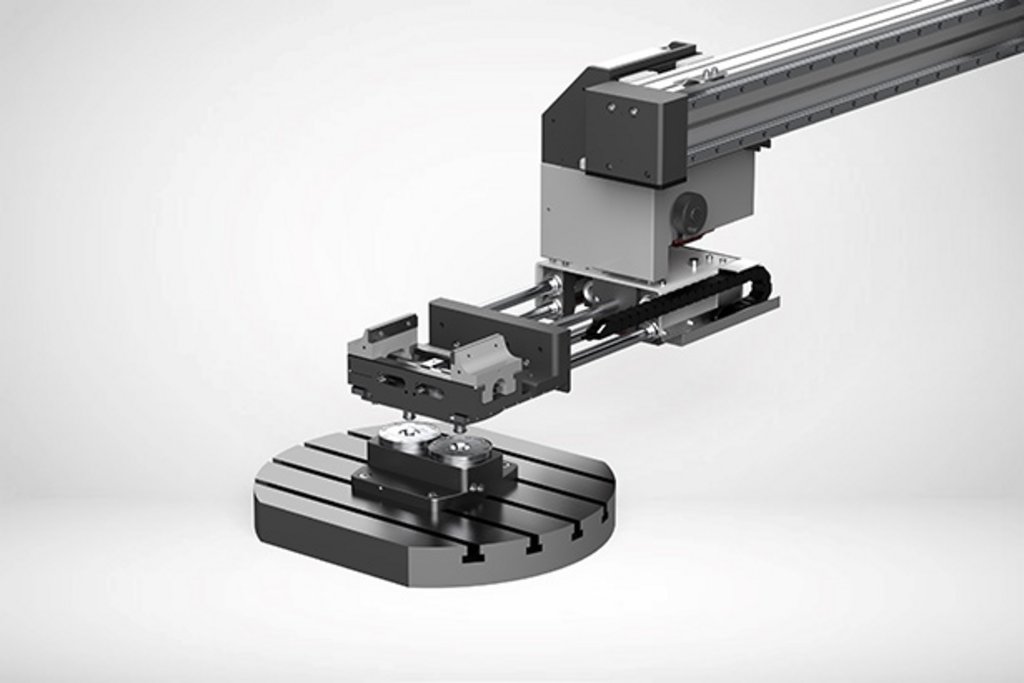
The simple version of our Indumatik systems requires a main gripper to pick up pallets, workpieces or tools. The gripper then picks up the pallet, for example, and moves it to the machining center for processing.
The main gripper can only perform one of these tasks. Depending on the expansion stage and the desired flexibility of the Indumatik, additional grippers are used, which are then inserted into the main gripper as sub-grippers.
ZERO POINT GRIPPER.
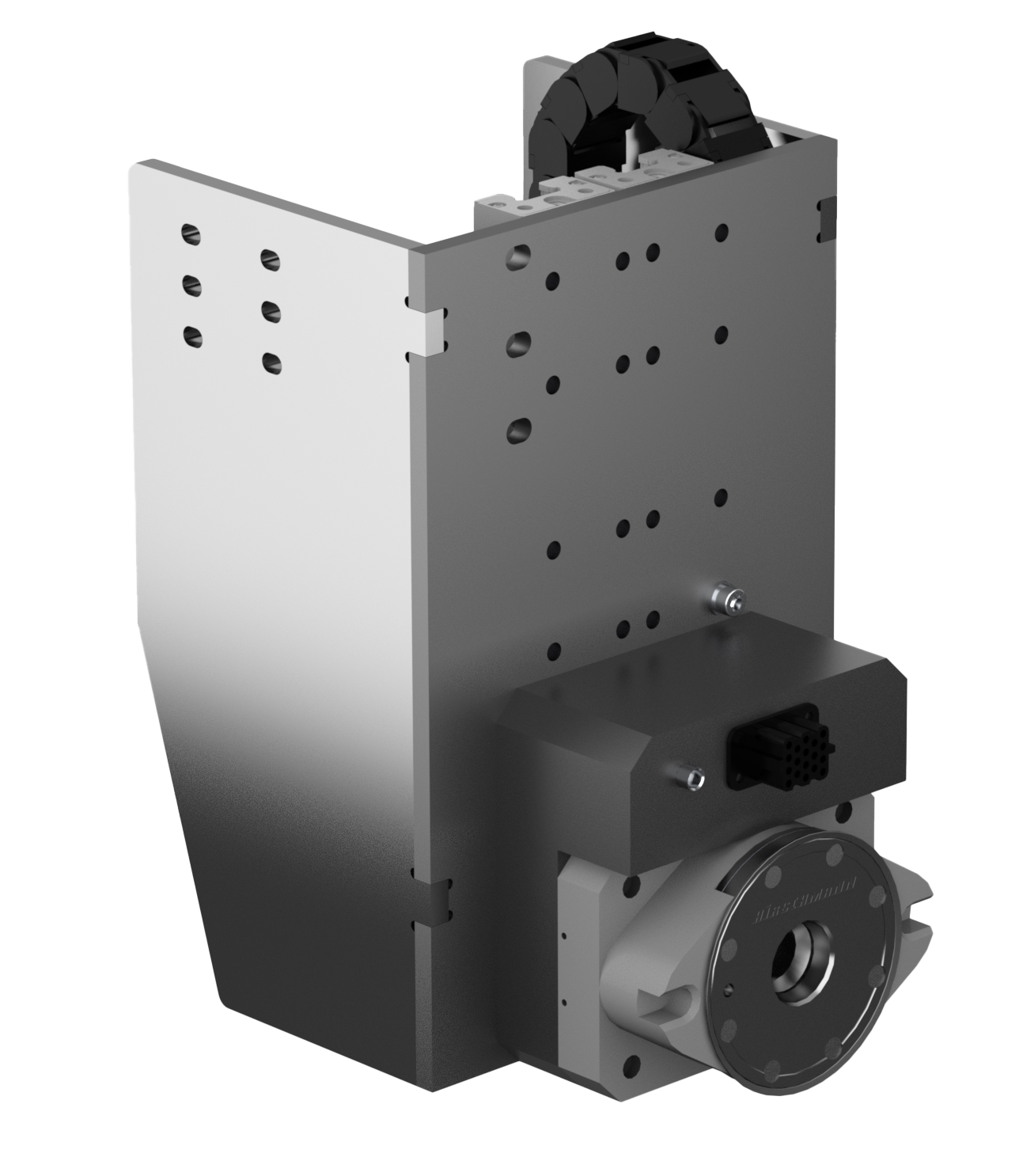
The zero-point gripper is a component of many standardized Indumatik systems. The zero-point gripper picks up pallets as standard and moves them into the machining center for processing. The maximum handling weight is 200 kg. The zero-point gripper is also used as an interface to various sub-grippers. In this case, compressed air and energy / sensors (media) are transferred from the main gripper (zero-point gripper) to the sub-gripper.


PARALLEL GRIPPERTOOL GRIPPER.
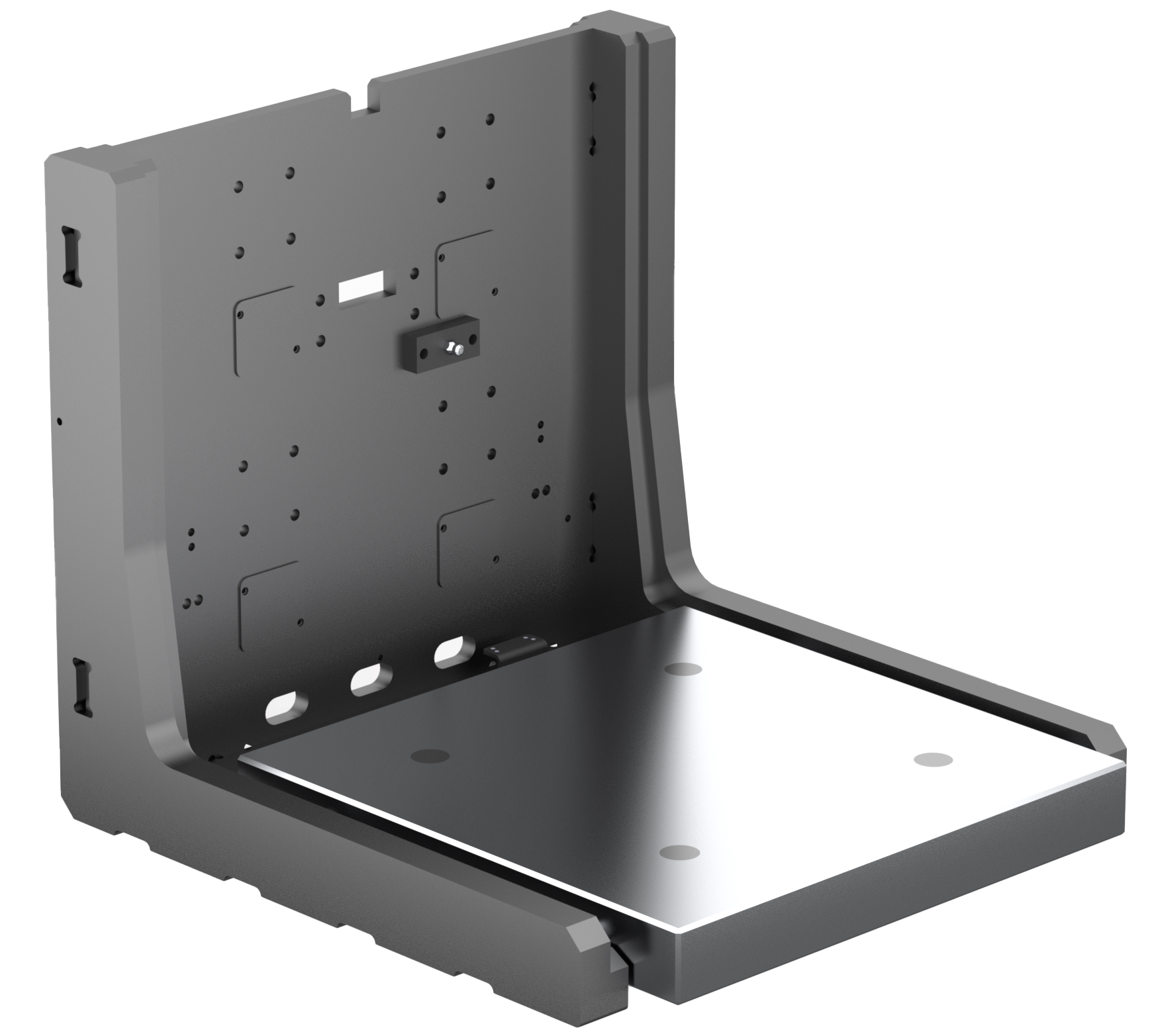
The parallel gripper is an active element and is used in the Indumatik Toolchanger, for example, to pick up the tools in the rack and then make them available to the machine. When moved into position, the gripper fingers are opened and closed by a few millimetres to safely pick up the tool for transport. The stroke is pneumatic and is monitored by sensors in the end positions.

DOUBLE GRIPPER (PARALLEL).
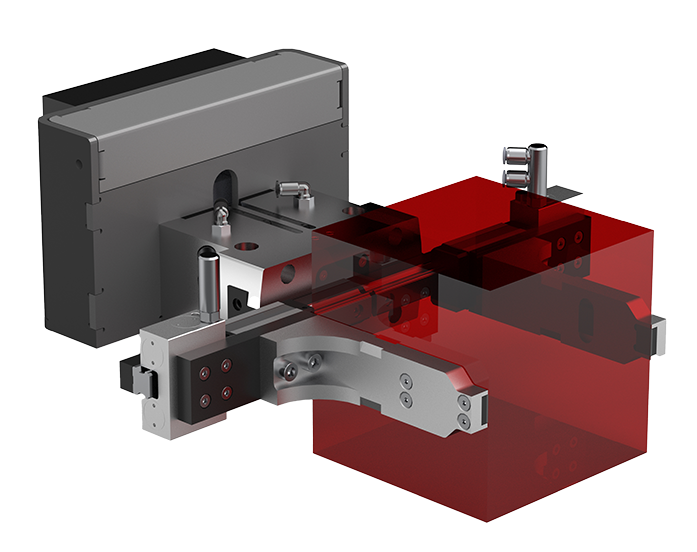
The double gripper is usually designed as a double parallel gripper. The advantage of this gripper is the quick changeover. A tool or workpiece is removed from the machine with a single movement and a new one is fed in with a short rotary movement. This significantly reduces changeover times and increases the productivity of the system.
GRIPPER PREMIUM.
The gripper Premium is a passive element that is mainly used for workpiece handling in conjunction with an articulated arm robot in the Indumatik VR 70. The gripper fingers are adjusted independently to the next workpiece size. This means that different workpiece sizes and components can be produced unmanned overnight in an Indumatik VR 70 without the need for a skilled worker to intervene.
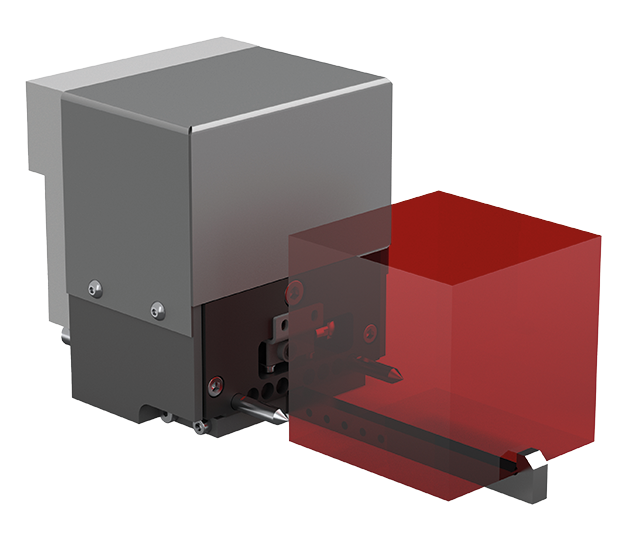
GRIPPER BASIC.
The Basic gripper is a passive element with independent adjustment of the opening path in the Indumatik. This gripper handles workpieces and is mainly used in conjunction with linear axis robots in the Indumatik VL 40 and Indumatik VL 80 as well as with articulated arm robots in the Indumatik 200. The adjustment to the next workpiece size is independent. This means that different workpiece sizes and components can be produced unmanned overnight in these systems without the need for a skilled worker to intervene.

FAQ - Your questions, our answers
What are grippers and what are their possible applications?
Grippers are mechanical devices used to grasp, move, and place objects. They are used in various industrial sectors, particularly in automation technology, manufacturing, and mechanical engineering.
What are gripper solutions in the context of Indumatik systems?
Gripper solutions refer to the various types of grippers used in Indumatik automation systems to handle and move pallets, workpieces, or tools. In their simplest form, Indumatik systems require one main gripper. Depending on the desired flexibility and configuration level of the system, additional grippers, known as sub-grippers, can be used, which are exchanged in the main gripper.
What is the difference between a fork grabber and a parallel grabber?
Fork grippers are primarily designed to grasp objects with two parallel gripping arms, ensuring high stability when handling loads. Parallel grippers, on the other hand, offer a smooth opening and closing movement of the gripping jaws, ideal for precise handling tasks.
What types of main grapples are there and what are they used for?
There are two main types of main grapples:
• Zero-point gripper: This gripper is standard in many Indumatik systems. It picks up pallets and transports them to the machining center. It can handle loads of up to 200 kg and also serves as an interface for sub-grippers, supplying them with compressed air and energy/sensors.
• Fork gripper: This is often used in Indumatik pallet systems to transport heavy loads weighing up to 500 kg. It moves under the pallet and lifts it for transport.
What different sub-grippers does Indumatik offer and what functions do they perform?
Indumatik offers a range of sub-grippers designed for specific tasks:
• Fork clamp (small): For handling small pallets or vices weighing up to 30 kg. The forks are passive and non-adjustable.
• Parallel gripper / tool gripper: An active element used in the Indumatik tool changer to pick up tools from the rack and deliver them to the machine. The stroke is pneumatic and sensor-controlled.
• Double gripper (parallel): Consists of two parallel grippers to speed up the changeover of workpieces or tools. It removes one tool and inserts a new one with a short turning movement, which increases productivity.
• Premium gripper: A passive element, mainly for workpiece handling in conjunction with an articulated arm robot (e.g., in the Indumatik VR 70). It enables automatic adjustment of the gripper fingers for different workpiece sizes, which allows unmanned production of different components overnight.
• Basic gripper: Also a passive element with independent adjustment of the opening path. It is mainly used in conjunction with linear axis robots (Indumatik VL 40, VL 80) and articulated arm robots (Indumatik 200) to handle different workpiece sizes without manual intervention.
What is the main difference between main grippers and sub-grippers?
Main grippers are the primary gripping elements that can directly handle pallets, workpieces, or tools and move them to the machining center. They can perform one task. Sub-grippers, on the other hand, are additional, specialized grippers that can be exchanged in the main gripper to perform more specific or diverse tasks, thereby expanding the flexibility and functionality of the Indumatik system. The main gripper (especially the zero-point gripper) can transfer media (compressed air, energy/sensors) to the sub-grippers.
When should I use a zero-point gripper?
Zero-point grippers are particularly suitable for automated machines, as they enable fast and precise fixing and positioning of workpieces. They are mainly used in machining centers or in robot applications where high precision is required.
How do I choose the right gripper for my application?
The choice of the right gripper depends on various factors, such as the type of object to be gripped (shape, size, weight), the required precision, the operating environment, and the requirements for speed and flexibility.
How does a fork grabber work in comparison to a parallel grabber?
A fork gripper uses two gripper arms to grasp objects at a specific angle, which is ideal for larger or irregular shapes. The parallel gripper, on the other hand, opens and closes the gripper jaws simultaneously to enable precise and even handling of objects.
Are gripper systems suitable for all industrial applications?
Gripper systems can be used in many different industries, from the automotive industry to medical technology and electronics manufacturing. However, they must be adapted to the specific requirements and challenges of each industry.
What role do gripper solutions play in automation and increasing efficiency?
Gripper solutions are crucial for the automation of manufacturing processes, as they enable machines to be loaded and unloaded independently. The use of specialized grippers such as the double gripper can significantly reduce changeover times, which increases the productivity of the system. Grippers such as the Premium and Basic grippers, with their autonomous adjustment, also enable unmanned production of different workpiece sizes and components overnight, further improving efficiency.
What types of applications are supported by Indumatik systems with gripper solutions?
Indumatik Systems supports various automation applications in manufacturing with its gripper solutions:
• Parts handling/workpiece handling: Direct feeding of workpieces or finished parts into the machining center without pallets, ideal for large quantities of low-weight parts.
• Pallet handling: Workpieces are clamped onto pallets and loaded into and unloaded from the machining center together with the pallet. This is ideal for small quantities or heavy handling weights and makes almost all clamping systems automatable.
• Multi-machine operation: Operation of multiple machines by an automation system.
• Tool extension: Integration of additional tools.
• Hybrid system: Combination of various automation elements.
Can Indumatik gripper solutions handle different workpiece sizes and weights?
Yes, Indumatik gripper solutions are designed to handle a wide range of workpiece sizes and weights. The zero-point gripper as the main gripper can handle up to 200 kg, for example, while the fork gripper can even handle up to 500 kg. For smaller weights up to 30 kg, there is the small fork gripper. In addition, grippers such as the Premium Gripper and Basic Gripper enable the handling of different workpiece sizes and components within a single system without the need for manual intervention thanks to their independent adjustment.
What maintenance measures are required for gripper systems?
Gripper systems require regular maintenance to ensure optimal performance. This includes lubricating moving parts, checking for wear, and calibrating gripper mechanisms to ensure handling accuracy.